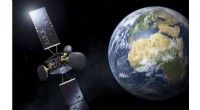
* Earth's Rotation: Indian astronomers, particularly in the Aryabhata school of thought, established the concept of Earth's rotation around its axis centuries before Copernicus proposed his heliocentric model. Aryabhata, in his work "Aryabhatiya," described Earth as a sphere rotating on its axis, causing day and night.
* Earth's Circumference: Aryabhata also calculated the Earth's circumference with remarkable accuracy, using a value for Pi that was very close to the modern value. His calculation was much more precise than the estimates made by Greek scholars.
* Positions and Movements of Planets: Indian astronomers made detailed observations and calculations of the positions and movements of planets, developing sophisticated astronomical models to predict their future locations. They also discovered the precession of equinoxes, a phenomenon where Earth's axis slowly changes its orientation over time.
* Solar and Lunar Eclipses: Indian astronomers developed accurate theories to explain solar and lunar eclipses, based on their understanding of the relative positions of the Sun, Earth, and Moon.
It's important to note that while Indian astronomers contributed significantly to these concepts, they didn't always achieve the same level of recognition or influence as their European counterparts. This is due to several factors, including the lack of widespread dissemination of their work beyond their region and the subsequent dominance of the European scientific paradigm in the later centuries.
However, their contributions remain invaluable and demonstrate the rich history of astronomical knowledge in ancient India.