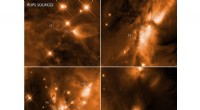
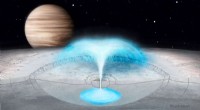
Astronomy: This is the main scientific field that studies celestial objects and phenomena, including stars, planets, galaxies, and the universe as a whole. It uses telescopes, spacecraft, and other tools to observe and analyze the sky.
Meteorology: This focuses on the study of weather patterns and atmospheric conditions. It analyzes factors like temperature, pressure, wind, and precipitation to understand and predict weather phenomena.
Atmospheric science: This broader field investigates the Earth's atmosphere, including its composition, dynamics, and interaction with other Earth systems. It touches upon topics like climate change, air pollution, and ozone depletion.
Aeronautics: This is the science of flight, dealing with aircraft design, navigation, and operation. It involves understanding the principles of aerodynamics and atmospheric conditions that impact aircraft performance.
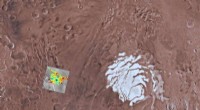
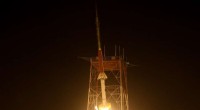
Space exploration: This field focuses on venturing beyond Earth, encompassing rocket science, spacecraft engineering, and the study of other planets and celestial bodies.
Therefore, "sky science" can be a broad umbrella term encompassing different scientific disciplines that explore the sky. It's important to clarify the specific area of interest within "sky science" to understand the specific knowledge and methods involved.