Stars: These are massive, luminous balls of plasma held together by their own gravity. They generate light and heat through nuclear fusion reactions in their core.
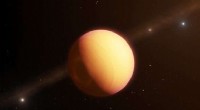
Planets: These are celestial bodies that orbit a star. They do not produce their own light, but they reflect light from their star, making them visible.
Moons: These are natural satellites that orbit planets. They also reflect light from their planet's star.
Comets: These are icy bodies that orbit the Sun. As they get closer to the Sun, they heat up and release gas and dust, creating a glowing tail.
Nebulae: These are clouds of gas and dust in space. They can be illuminated by nearby stars or by the emission of light from within the cloud itself.
Supernovae: These are the explosions of dying stars. They release an immense amount of light and energy, making them some of the brightest objects in the universe.
Active galactic nuclei (AGN): These are the supermassive black holes at the centers of some galaxies. They emit intense radiation, including light, as matter falls into them.
Quasars: These are incredibly bright, distant objects powered by AGN. They are some of the most luminous objects in the universe.
It's important to note that some objects, like planets and moons, only reflect light and don't produce their own. However, all the objects listed above contribute to the beautiful and fascinating night sky.