* Archimedes' principle: This principle states that the buoyant force on an object submerged in a fluid (or gas) is equal to the weight of the fluid displaced by the object.
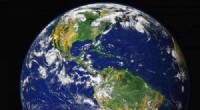
* Satellites in orbit: Satellites are in a vacuum, essentially in the absence of any fluid or gas. They experience the force of gravity, which keeps them in orbit.
Key differences:
* Fluid displacement: Archimedes' principle relies on the displacement of a fluid, which doesn't occur in the vacuum of space.
* Buoyancy: Buoyancy is a force that opposes the weight of an object in a fluid. Satellites don't experience buoyancy because they're not in a fluid.
What affects satellites in orbit:
* Gravity: The primary force acting on satellites is gravity from the Earth.
* Orbital mechanics: Satellites move in a balance between gravity and their orbital velocity.
* Solar radiation pressure: A very small force, but it can affect satellites over long periods.
In summary: Archimedes' principle is not applicable to satellites in orbit because it deals with the buoyancy of objects in fluids, and satellites operate in a vacuum.