Small Stuff
* Asteroids: Rocky bodies, mostly found in the asteroid belt between Mars and Jupiter.
* Comets: Icy bodies that release gas and dust as they approach the Sun.
* Moons: Natural satellites that orbit planets.
Planets and Stars
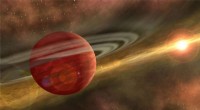
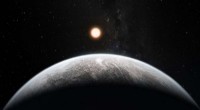
* Planets: Massive objects that orbit stars.
* Stars: Massive, luminous spheres of plasma, held together by gravity.
The Big Ones
* Neutron Stars: The collapsed cores of massive stars, extremely dense and incredibly small (but with very strong gravity).
* White Dwarfs: The remnants of stars like our Sun, about the size of Earth but incredibly dense.
* Black Holes: Regions of spacetime where gravity is so strong that nothing, not even light, can escape. They come in various sizes, from stellar-mass black holes to supermassive black holes at the centers of galaxies.
The Really Big Ones
* Galaxies: Vast collections of stars, gas, dust, and dark matter, held together by gravity. These are the largest self-gravitating structures known.
* Galaxy Clusters: Collections of galaxies bound together by gravity.
* Superclusters: Large groups of galaxy clusters, the largest known gravitationally bound structures.
It's important to note:
* Size isn't everything! While black holes can be remarkably small (some only a few miles across), their gravity is incredibly powerful.
* The Universe is still being explored! We are constantly discovering new and massive objects, and it's possible that even larger structures exist that we haven't yet detected.
So, while galaxies and superclusters are the biggest things we know of, the "largest" astronomical body could be something we haven't discovered yet!