1. Telescopes:
* Ground-based telescopes: These use lenses or mirrors to gather light from distant objects, allowing scientists to study their properties, composition, and movements. Some examples include:
* Optical telescopes: Observe visible light.
* Radio telescopes: Detect radio waves, which can penetrate clouds and dust.
* Infrared telescopes: Observe infrared radiation, which is emitted by warm objects.
* X-ray telescopes: Observe X-rays, which are emitted by hot objects.
* Gamma-ray telescopes: Observe gamma rays, the most energetic form of light.
* Space telescopes: These orbit above Earth's atmosphere, providing a clearer view of the universe without interference. Examples include:
* Hubble Space Telescope: Captures visible and ultraviolet light images.
* James Webb Space Telescope: Observes infrared light, allowing scientists to see the first stars and galaxies.
* Chandra X-ray Observatory: Captures X-rays from black holes, supernovae, and other energetic objects.
2. Spacecraft:
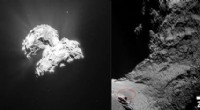
* Flybys: These spacecraft pass by a celestial object, taking measurements and capturing images.
* Orbiters: These spacecraft circle a celestial object, providing long-term observation and data collection.
* Landers: These spacecraft land on the surface of a celestial object, collecting data directly from the ground.
* Rovers: These spacecraft explore the surface of a celestial object, taking samples and conducting experiments.
* Sample return missions: These spacecraft collect samples from a celestial object and bring them back to Earth for analysis.
3. Other Techniques:
* Spectroscopy: Scientists analyze the light from celestial objects to determine their composition, temperature, and movement.
* Radar: By sending radio waves to a celestial object and measuring the time it takes for the signal to return, scientists can determine the object's distance and size.
* Gravitational lensing: This phenomenon, caused by the bending of light by gravity, allows scientists to study objects that are too faint to be seen directly.
* Neutrinos: These tiny particles can travel through matter almost unimpeded, providing information about the sun's interior and distant supernovae.
* Cosmic rays: These high-energy particles from space provide clues about the origins and evolution of the universe.
Data Analysis:
Scientists use sophisticated software and algorithms to process and analyze the vast amounts of data collected from telescopes and spacecraft. They use this data to answer fundamental questions about the universe, such as:
* How did the universe begin?
* What are the building blocks of the universe?
* Are we alone in the universe?
The field of astronomy is constantly evolving, with new technologies and techniques being developed to push the boundaries of our knowledge. The exploration of our solar system and the universe will continue to be a source of wonder and discovery for generations to come.