Astronomy:
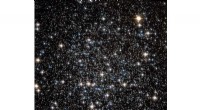
* Observe celestial objects: View planets, stars, galaxies, nebulae, and other deep-sky objects.
* Study planetary features: Observe details on planets like Jupiter's Great Red Spot or Saturn's rings.
* Track celestial movements: Follow the paths of stars and planets across the sky.
* Witness astronomical events: Observe meteor showers, lunar eclipses, and other astronomical events.
* Conduct research: Amateur astronomers use telescopes to contribute to scientific research, like discovering new comets or variable stars.
Other uses:
* Birdwatching: Large telescopes with high magnification can be used for birdwatching, especially at long distances.
* Surveillance: Telescopes can be used for long-range surveillance in security applications.
* Photography: Telescopes can be adapted for astrophotography, capturing images of celestial objects.
* Education and outreach: Telescopes are used for teaching astronomy and inspiring the public about space.
* Navigation: Historically, telescopes were used for navigation, especially at sea.
The type of telescope you have will determine the specific things you can do with it. Here's a brief overview:
* Refracting telescopes: Good for beginners and observing planets and the Moon.
* Reflecting telescopes: Ideal for observing fainter deep-sky objects, like galaxies and nebulae.
* Catadioptric telescopes: Combine features of both refractors and reflectors, offering good performance in a compact design.
Choosing a telescope depends on your interests, budget, and location. It's important to consider factors like aperture, magnification, portability, and light pollution.