However, there are key differences in their definitions that impact how they are categorized:
* Planets: Planets are defined as celestial bodies that orbit a star, are massive enough to be rounded by their own gravity, and have cleared their orbital neighborhood of other objects.
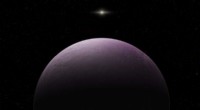
* Dwarf Planets: Dwarf planets also orbit a star and are large enough to be rounded by their own gravity, but they have not cleared their orbital neighborhood. This means they share their orbit with other objects of similar size.
So, what does this mean in terms of "doing" something?
* Planets are dominant in their orbital region: They have cleared their orbital path, meaning they are the main gravitational influence in that area.
* Dwarf planets share their space: They orbit alongside other objects, meaning they are not the dominant gravitational force in their region.
It's more about their relationship to their environment than any specific "action" they can perform.
Examples:
* Pluto: Once considered a planet, Pluto was reclassified as a dwarf planet because it shares its orbital space with other objects in the Kuiper Belt.
* Earth: Earth is a planet because it has cleared its orbital path and is the dominant gravitational force in its region.
Ultimately, the difference between planets and dwarf planets is about their gravitational dominance within their orbital neighborhood.