1. Axis of Rotation:
* Earth: Rotates on its axis tilted at an angle of 23.5 degrees. This tilt causes seasons.
* Sun: Rotates on its axis, but it doesn't have a defined solid axis like Earth. Instead, it rotates differentially, meaning different parts of the Sun rotate at different speeds. The equator rotates faster than the poles.
2. Period of Rotation:
* Earth: Rotates once in approximately 24 hours, which defines a day.
* Sun: The Sun's rotation period varies depending on latitude. At the equator, it rotates once in about 25 days. At the poles, the rotation period is longer, about 36 days.
3. Rotation Direction:
* Earth: Rotates on its axis from west to east, which is why the sun appears to rise in the east and set in the west.
* Sun: Also rotates from west to east, but its rotation is not as noticeable from Earth due to its immense size.
4. Internal Structure:
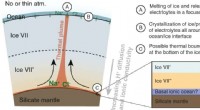
* Earth: Has a solid core, a liquid outer core, a mantle, and a crust. This solid structure allows for a consistent and defined rotation.
* Sun: Is a giant ball of plasma, a superheated gas. This means its rotation is not as rigid and is influenced by internal magnetic fields and convection currents.
5. Observable Features:
* Earth: We can directly observe its rotation due to the changing positions of the sun and stars throughout the day.
* Sun: Its rotation is observed indirectly through the movement of sunspots, which are dark areas on the Sun's surface.
In Summary:
The Sun's rotation is a complex and dynamic process influenced by its gaseous nature and magnetic fields. In contrast, Earth's rotation is more consistent and defined by its solid structure. These differences have significant implications for the behavior of both celestial bodies.