* Terrestrial Planets: Both are terrestrial planets, meaning they are primarily composed of rock and metal, as opposed to gas giants like Jupiter and Saturn.
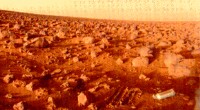
* Solid Surface: They both have solid surfaces, although Mercury's is heavily cratered due to its lack of an atmosphere.
* Magnetic Field: Both Earth and Mercury possess a magnetic field, although Mercury's is much weaker.
* Differentiation: Both planets have undergone differentiation, meaning heavier elements like iron sank to their cores, while lighter elements like silicate rock formed their crusts.
* Rotation: Both planets rotate on their axis. Earth rotates in approximately 24 hours, while Mercury's rotation is much slower, taking about 59 Earth days.
* Revolution: Both planets revolve around the Sun. Earth completes a revolution in 365 days, while Mercury completes its orbit in just 88 days.
However, there are also significant differences between the two planets:
* Size and Mass: Mercury is significantly smaller and less massive than Earth.
* Atmosphere: Earth has a thick atmosphere, while Mercury has a very thin, almost negligible atmosphere.
* Temperature: Due to its proximity to the sun and lack of atmosphere, Mercury experiences extreme temperature variations, ranging from -173°C (-279°F) at night to 427°C (801°F) during the day. Earth has a much more moderate temperature range due to its atmosphere.
* Water: Earth has abundant liquid water on its surface, while Mercury has no evidence of liquid water.
* Life: Earth supports life in its diverse forms, while Mercury is considered to be lifeless.
Therefore, while Earth and Mercury share some basic characteristics, their unique features and conditions create vastly different environments.