1. Earth's Rotation: The most significant factor is our planet's daily rotation. As Earth spins on its axis, we see the stars and planets moving across the sky from east to west. This is an apparent motion caused by our perspective on a rotating Earth.
2. Earth's Orbit: Earth orbits the Sun, and this motion influences how we see the planets. Over time, as Earth moves along its orbit, our vantage point shifts, causing the relative positions of the planets to change. This change is gradual but noticeable over weeks and months.
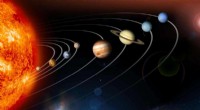
3. Planets' Orbits: The planets themselves are also orbiting the Sun, each with its own unique orbital period and path. As they move in their orbits, their positions relative to Earth change. This can make them appear to move faster or slower, or even change direction in the sky.
4. Perspective: Our perception of the planets' positions is influenced by our position on Earth. Depending on our location and the time of year, the planets might appear higher or lower in the sky, and they might be visible for longer or shorter periods.
In summary: The planets appear to change position at night due to a combination of Earth's rotation, Earth's orbit, the planets' own orbits, and our changing perspective. While the stars seem to remain in the same positions relative to each other, the planets exhibit noticeable movement over time, reflecting the intricate dance of celestial bodies in our solar system.