Here's why:
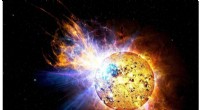
* Nuclear Fusion: Stars generate energy through nuclear fusion, where lighter elements combine to form heavier ones. The heavier the star, the higher its core temperature and pressure, allowing for the fusion of heavier elements.
* Stellar Evolution: Stars go through different stages of evolution. Massive stars burn through their fuel much faster than lighter stars. As a result, they undergo more complex fusion processes, creating heavier elements like carbon, oxygen, silicon, and even iron.
* Supernova Explosions: When massive stars reach the end of their lives, they explode as supernovae. These explosions release tremendous energy and scatter the newly created heavy elements into the surrounding space.
* Light Stars: Light stars like our Sun mainly produce hydrogen and helium through fusion. They are not massive enough to create heavier elements in significant quantities.
Summary:
* Heavy stars (greater than 8 times the mass of the Sun): Produce heavier elements through multiple fusion stages and release them during supernova explosions.
* Light stars: Primarily fuse hydrogen and helium, producing less significant amounts of heavier elements.
Therefore, heavy stars are responsible for the creation and distribution of heavier elements in the universe, contributing to the chemical diversity we see.