Here's why:
* Origin: The CMB originated from the very early universe, when the universe was extremely hot and dense. At that time, photons (light particles) were constantly interacting with matter.
* Cooling and Decoupling: As the universe expanded and cooled, the photons eventually decoupled from matter. This happened about 380,000 years after the Big Bang.
* The "Afterglow" The decoupled photons continued to travel freely through the expanding universe, carrying information about the early universe. This is what we observe today as the CMB.
* Near-Perfect Uniformity: The CMB is extremely uniform, meaning that its temperature and intensity are almost identical in all directions. This uniformity suggests that the early universe was remarkably homogeneous.
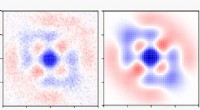
However, the CMB isn't perfectly uniform. It has tiny variations, or anisotropies, which are extremely important for cosmology. These anisotropies tell us about:
* The Early Universe: The tiny variations in the CMB reflect the initial density fluctuations in the early universe. These fluctuations were the seeds for the formation of galaxies and large-scale structures we see today.
* The Universe's Expansion: The anisotropies also contain information about the expansion rate of the universe.
So, while the CMB is almost perfectly uniform in all directions, the small variations hold crucial information about the origin and evolution of our universe.