1. Temperature: This is the most obvious pattern. The further a planet is from the Sun, the less solar radiation it receives, resulting in lower average surface temperatures. This is why Mercury, the closest planet, is incredibly hot, while Neptune, the furthest, is incredibly cold.
2. Orbital Period: Kepler's Third Law of Planetary Motion states that the square of a planet's orbital period (the time it takes to orbit the Sun) is proportional to the cube of its average distance from the Sun. So, planets further away from the Sun take longer to complete an orbit.
3. Composition: Planets that are closer to the Sun are primarily composed of rock and metal, while planets further out are primarily composed of gas and ice. This is because the intense heat near the Sun would have vaporized lighter elements, while the colder temperatures further out allowed for the accretion of these materials.
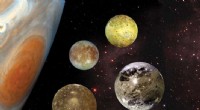
4. Number of Moons: While not a perfect correlation, there is a tendency for planets further from the Sun to have more moons. This is likely due to the larger gravitational influence of these planets, allowing them to capture more smaller celestial objects.
5. Density: Generally, planets closer to the Sun are denser than those further out. This is because the inner planets are composed of heavier elements, while the outer planets are mostly gas and ice.
6. Presence of Rings: While not exclusive to distance, it is notable that the gas giants, which are further from the Sun, are the only planets in our solar system known to have prominent ring systems. These rings are likely formed from debris captured by the planet's gravity.
7. Surface Features: Planets closer to the Sun tend to have more extreme surface features like volcanoes, canyons, and craters, due to the intense solar radiation and gravitational forces. Outer planets often have smoother surfaces with fewer features.
Important Note: While these patterns exist, they are not absolute. There are exceptions to these general trends, and other factors besides distance play a role in shaping a planet's characteristics.
Other Considerations:
* Planetary Formation: The initial conditions of the protoplanetary disk where a planet forms also influence its composition and properties.
* Gravitational Interactions: The gravitational influence of other planets can affect a planet's orbit, composition, and even its atmosphere.
* Internal Heating: Internal heat sources, such as radioactive decay, can also play a significant role in shaping a planet's characteristics.
Ultimately, understanding the relationship between distance from the Sun and other planetary characteristics requires considering a complex interplay of factors.