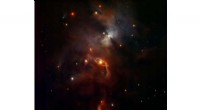
Current Operational Telescopes:
* James Webb Space Telescope (JWST): Launched in 2021, JWST is a powerful infrared telescope designed to study the early universe, exoplanets, and other celestial objects. Its primary mirror is significantly larger than Hubble's, allowing it to see farther and deeper into space.
* Chandra X-ray Observatory: This telescope observes the universe in X-rays, revealing phenomena invisible to optical telescopes like black holes, supernova remnants, and hot gas in galaxy clusters.
* Spitzer Space Telescope: Now retired, Spitzer was an infrared telescope that made important discoveries about the formation of stars and planets.
* Gaia: This European Space Agency mission is mapping the Milky Way with unprecedented precision, determining the positions and movements of billions of stars.
* Kepler: This mission discovered thousands of exoplanets, revolutionizing our understanding of planetary systems outside our own solar system.
Other Notable Telescopes (past and future):
* CoRoT: This French space telescope discovered numerous exoplanets and helped refine our understanding of their formation.
* SOHO (Solar and Heliospheric Observatory): This spacecraft studies the Sun and its interactions with the solar system.
* XMM-Newton: This European Space Agency X-ray telescope provides detailed images of the hot, energetic universe.
* Euclid: This upcoming mission, scheduled for launch in 2023, will study dark matter and dark energy by mapping the large-scale structure of the universe.
* Nancy Grace Roman Space Telescope: This NASA mission, planned for launch in the mid-2020s, will observe the universe in infrared light and study dark energy, exoplanets, and more.
Important Note: This list is not exhaustive. There are numerous other telescopes in orbit and on Earth, each with unique capabilities and contributions to our understanding of the cosmos.