1. Closest to the Sun: Mercury holds the title of the closest planet to our Sun, orbiting at an average distance of 36 million miles (58 million kilometers). This proximity leads to extreme temperature fluctuations, with scorching daytime highs of 800°F (430°C) and frigid nighttime lows of -290°F (-180°C).
2. Smallest Terrestrial Planet: Mercury is the smallest terrestrial planet, with a diameter of just 3,032 miles (4,880 kilometers). It's even smaller than Jupiter's moon Ganymede and Saturn's moon Titan.
3. Very Thin Atmosphere: Mercury has an extremely thin atmosphere, known as an exosphere, which is constantly being replenished by solar wind particles and meteoroid impacts. This thin atmosphere does little to protect the planet from the harsh radiation and solar wind, which contribute to the extreme temperature fluctuations.
4. Highly Elliptical Orbit: Mercury has a highly eccentric orbit, meaning it's more elliptical than circular. This causes significant variations in the planet's distance from the Sun, leading to even more extreme temperature differences between its perihelion (closest point to the Sun) and aphelion (farthest point from the Sun).
5. Giant Core: Mercury has an unusually large iron core, making up about 85% of its total radius. This massive core is believed to be responsible for its weak magnetic field, which is only about 1% as strong as Earth's.
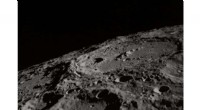
6. Surface Features: Mercury's surface is heavily cratered, showcasing a long history of bombardment by asteroids and comets. It also features vast plains, scarps (cliffs), and unusual tectonic features like wrinkle ridges, indicating a complex geological past.
7. Tidal Locking: Mercury has a 3:2 spin-orbit resonance, meaning it rotates three times for every two orbits around the Sun. This unusual rotation period results in a unique "day" on Mercury, which is equivalent to two Mercurian years.
These unique characteristics make Mercury a fascinating object of study, providing valuable insights into the formation and evolution of planetary systems.