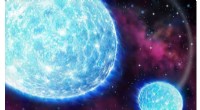
* Red dwarfs are extremely long-lived: Their lifespan is measured in trillions of years, far longer than the current age of the universe. This means we haven't observed a red dwarf die yet.
* Red dwarfs don't go supernova: Unlike larger stars, red dwarfs don't have enough mass to explode as supernovae.
* They gently fade: When a red dwarf runs out of fuel, it will slowly cool and shrink, becoming a white dwarf. This process doesn't involve the dramatic ejection of material that creates nebulae.
Nebulae are formed when:
* Massive stars explode as supernovae: The shock waves from the explosion push out gas and dust, creating the beautiful, colorful nebulae we see.
* Stars shed their outer layers: In their later stages, some stars shed their outer layers, forming planetary nebulae.
Therefore, the death of a red dwarf is a much more subdued event than the death of a larger star. While it might eventually become a white dwarf, it won't create a spectacular nebula.