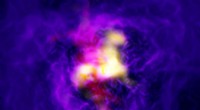
1. Gravity's Pull: A nebula, a cloud of gas and dust, is held together by its own gravity. This gravity pulls the particles in the nebula towards each other.
2. Collapse and Heating: As the nebula collapses, its density increases. This means more particles are packed into a smaller space. The collisions between these particles generate heat, raising the temperature of the collapsing core.
3. Nuclear Fusion Ignition: As the temperature in the core reaches millions of degrees, the pressure becomes immense. This intense heat and pressure force atomic nuclei (primarily hydrogen) to overcome their natural repulsion and fuse together. This nuclear fusion process releases a tremendous amount of energy, creating light and heat.
4. Star Formation: The outward pressure from the energy released by nuclear fusion counteracts the inward pull of gravity, creating a stable equilibrium. This equilibrium is what defines a star – a giant ball of hot gas held together by its own gravity and powered by nuclear fusion.
In Summary: The core of a collapsing nebula forms a star because gravity pulls the material together, the collapse generates heat and pressure, and eventually the core becomes hot and dense enough to trigger nuclear fusion. This fusion process provides the energy that stabilizes the star and makes it shine.