Composition:
* Gas giants: All four are primarily composed of gas, primarily hydrogen and helium, with smaller amounts of heavier elements.
* Rocky cores: They are believed to have relatively small, dense rocky cores at their centers.
* No solid surface: They lack a solid surface like Earth and other terrestrial planets.
Physical Characteristics:
* Large size: They are much larger than the inner planets, with Jupiter being the largest planet in our solar system.
* Low density: Due to their gaseous composition, they have much lower densities than the inner planets.
* Rapid rotation: They rotate very quickly, leading to strong winds and storms in their atmospheres.
* Numerous moons: They all have extensive moon systems, with Jupiter and Saturn having dozens of moons.
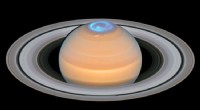
* Ring systems: All outer planets possess ring systems, although Saturn's are the most prominent.
Orbit and Distance:
* Far from the Sun: They orbit far from the Sun, resulting in very cold temperatures.
* Long orbital periods: They take a long time to complete one orbit around the Sun.
Other Similarities:
* Dynamic atmospheres: Their atmospheres are constantly changing due to strong winds, storms, and other atmospheric phenomena.
* Magnetic fields: All outer planets have strong magnetic fields, which are believed to be generated by the movement of their interiors.
While sharing these similarities, the outer planets also have distinct differences in their atmospheres, ring systems, and moon systems. For example, Jupiter has a Great Red Spot, a massive storm that has been raging for centuries, while Neptune has an intense blue color due to the presence of methane in its atmosphere.