Here's the breakdown:
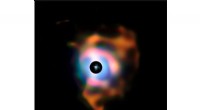
* Gravity is the force that *pulls* matter together. It's what keeps planets orbiting stars and stars in galaxies. So, gravity *does* play a role in nebulas.
* Nebulas are mostly gas and dust. These particles are spread out over vast distances, meaning the gravitational pull between them is relatively weak.
* Internal pressure and radiation pressure can counteract gravity. These forces come from within the nebula, primarily from stars within it or radiation from nearby stars. This pressure pushes the gas and dust outward.
Therefore, nebulas aren't held together by gravity alone. Instead, they're in a delicate balance between gravity pulling inward and pressure pushing outward. This balance is what allows nebulas to exist and evolve over time.
Here's a simplified analogy: imagine a cloud of smoke. The smoke particles are attracted to each other by gravity (very weakly), but the air currents (like pressure) are constantly pushing them around. This creates a dynamic, ever-changing cloud, similar to a nebula.