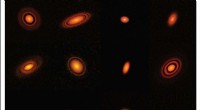
* Planet formation is common: We've observed planet formation around stars in our own Milky Way galaxy, and there's no reason to believe this is unique to our galaxy. The processes of star formation and disk formation that lead to planets are thought to be universal.
* Exoplanets abound: We've discovered thousands of exoplanets outside our solar system, and many of them are found in different types of galaxies.
* Galaxies are diverse: Galaxies come in various sizes, shapes, and compositions. While some galaxies might have conditions less conducive to planet formation, there's no compelling reason to think planets are absent from all of them.
However, there are limitations to our current knowledge:
* Observational challenges: Directly observing planets in other galaxies is extremely difficult due to their faintness and the vast distances involved.
* Indirect methods: Most exoplanet detections rely on indirect methods like the transit method or radial velocity method, which have limitations in terms of distance and the types of planets they can detect.
In conclusion: While it's impossible to definitively state that all galaxies have planets, the evidence suggests that it's highly probable. As our observational capabilities improve, we can expect to find more evidence for planets in galaxies far beyond our own.