* Phases of Venus: Galileo observed that Venus goes through phases just like the Moon (new, crescent, gibbous, full). This was only possible if Venus orbited the Sun, not the Earth. In the geocentric model, Venus would always appear as a crescent or full disc, never as a gibbous phase.
* Moons of Jupiter: Galileo discovered four moons orbiting Jupiter. This was significant because it showed that not everything revolved around the Earth, contradicting the geocentric model.
* Sunspots: Galileo observed dark spots on the Sun, indicating that the Sun itself wasn't perfect, a core belief of the geocentric model. He also noted that the spots moved, suggesting the Sun was rotating.
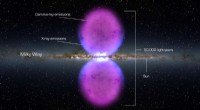
* Observations of the Milky Way: Galileo used his telescope to see that the Milky Way is made up of countless stars, challenging the geocentric model's view of the Milky Way as a luminous haze.
While Galileo's observations were powerful evidence for the heliocentric model, they didn't conclusively prove it. The scientific community was hesitant to fully embrace heliocentrism due to the power of the geocentric model and religious objections. It took more time and evidence from other scientists for heliocentrism to become widely accepted.