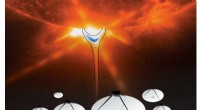
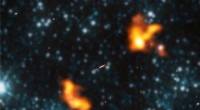
1. Formation of a Nebula: The solar system began as a giant cloud of gas and dust called a nebula.
2. Gravitational Collapse: Over millions of years, gravity caused the nebula to collapse, spinning and heating up in the process.
3. Formation of the Sun: As the core of the nebula contracted, it became so hot and dense that nuclear fusion ignited, forming the Sun.
4. Formation of the Planets: The remaining material in the disk around the young Sun began to clump together, forming planetesimals. These planetesimals eventually collided and merged to form the planets.
5. Differentiation: The heat from the Sun and radioactive decay within the planets caused them to differentiate, forming layers of different densities.
The nebular hypothesis is supported by a vast amount of observational evidence, including:
* The orbital patterns of the planets: All planets orbit the Sun in the same direction and on nearly the same plane.
* The composition of the planets: The inner rocky planets (Mercury, Venus, Earth, Mars) have a different composition than the outer gas giants (Jupiter, Saturn, Uranus, Neptune).
* The presence of asteroids and comets: These remnants of the early solar system provide further evidence for the nebular hypothesis.
Conclusion: The photoplanet hypothesis does not exist in the scientific community, and the nebular hypothesis remains the most widely accepted explanation for the formation of the solar system.