1. Cold Objects:
* Molecular clouds: These vast clouds of gas and dust are the birthplaces of stars. Radio telescopes can detect the faint radio waves emitted by molecules within these clouds, giving us insights into the composition and evolution of stars.
* Interstellar gas: The vast spaces between stars aren't completely empty. Radio telescopes can map the distribution of hydrogen and other gases in the interstellar medium, providing information on galactic structure and dynamics.
* Planetary atmospheres: Radio waves can penetrate through clouds and even penetrate the surface of some planets, allowing us to study the atmospheres of planets in our solar system and beyond.
2. Energetic Phenomena:
* Supernova remnants: When massive stars explode, they create expanding shells of gas and particles that emit radio waves. Radio telescopes help us study the composition and evolution of these remnants.
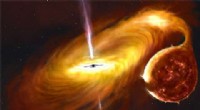
* Active galactic nuclei (AGN): The supermassive black holes at the centers of many galaxies release enormous amounts of energy in the form of radio waves. Radio telescopes provide insights into the feeding and evolution of these black holes.
* Pulsars: These rapidly rotating neutron stars emit beams of radio waves that sweep across the sky like lighthouses. Radio telescopes allow us to study the properties and behavior of pulsars.
* Cosmic microwave background radiation: The afterglow of the Big Bang can be detected as faint radio waves. Radio telescopes have been used to study this radiation, providing information on the early universe and the nature of dark matter.
3. Other Interesting Objects:
* Galaxies: Radio telescopes can map the distribution of gas and dust in galaxies, providing information on their structure, composition, and evolution.
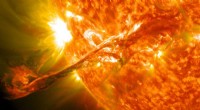
* Solar flares: These bursts of energy from the Sun emit radio waves that can be studied by radio telescopes.
* Cosmic rays: High-energy particles from space can interact with the Earth's atmosphere, producing radio waves that can be detected.
In essence, radio telescopes are powerful tools that allow us to see beyond the visible spectrum, providing us with a deeper understanding of the universe and its most fascinating objects and phenomena.