What they are:
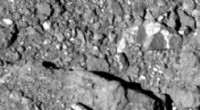
* Small, rocky bodies: Most asteroids are much smaller than planets, with the largest, Ceres, being classified as a dwarf planet.
* Leftover building blocks: Asteroids are thought to be remnants from the early solar system, representing the materials that never quite formed a planet.
* Orbit the Sun: They follow elliptical paths around the Sun, like planets do.
* Different shapes and sizes: Asteroids come in various shapes and sizes, from giant, irregularly shaped bodies to small, pebble-sized objects.
* Made of different materials: They are primarily composed of rock, metal, and carbon-rich materials.
Why they are important:
* Clues to the solar system's past: Studying asteroids gives us insights into the early formation and evolution of our solar system.
* Potential resources: Some asteroids contain valuable resources like minerals and water, which could be mined in the future.
* Possible threats: Though most asteroids pose no threat, some have orbits that could bring them close to Earth. This is why scientists are constantly monitoring them.
Some interesting facts:
* The asteroid belt: This is the main region where most asteroids are found.
* Near-Earth asteroids: These asteroids have orbits that bring them close to Earth.
* Trojan asteroids: These are found in the same orbit as Jupiter, leading or trailing it.
* Meteoroids: Small pieces of asteroids and comets that enter Earth's atmosphere are called meteoroids. When they burn up, we see them as meteors or "shooting stars."
To summarize: Asteroids are fascinating remnants of the solar system's formation, providing valuable information about our past while potentially holding resources for the future. While some may pose a threat, they are mostly harmless and continue to fascinate astronomers and space enthusiasts alike.