Black Holes
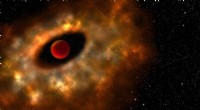
* Massive Stars: Stars with at least 8 times the mass of our Sun undergo a violent supernova explosion at the end of their lives. The core of the star collapses under its own gravity, crushing the matter into an incredibly dense point called a singularity. This singularity has such strong gravity that not even light can escape its pull, creating a black hole.
Neutron Stars
* Intermediate-Mass Stars: Stars with masses between 8 and 20 times that of our Sun also experience a supernova explosion. However, the core collapse stops before a singularity forms, resulting in the formation of a neutron star.
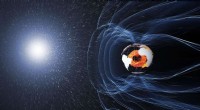
* Neutron Stars: These stars are incredibly dense, with their entire mass packed into a sphere only about 12 miles across. The intense pressure forces protons and electrons in the core to combine, forming neutrons. This creates a very stable structure, preventing further collapse.
The Process
1. Nuclear Fusion: Stars generate energy through nuclear fusion in their core, fusing hydrogen into helium. This process creates outward pressure that balances the inward force of gravity.
2. Fuel Depletion: Eventually, the star runs out of hydrogen fuel. It starts fusing heavier elements, like helium, carbon, and oxygen. This process becomes increasingly unstable.
3. Core Collapse: As the core runs out of fuel, it can no longer support itself against gravity. It collapses rapidly, triggering a supernova explosion.
4. Black Hole Formation: If the core is massive enough (over 8 solar masses), the collapse continues past the neutron star stage. The core becomes infinitely dense, forming a singularity and a black hole.
5. Neutron Star Formation: If the core is less massive (between 8 and 20 solar masses), the collapse stops at the neutron star stage. The intense gravity compresses the core into a ball of densely packed neutrons.
Key Points
* Supernova: Both black holes and neutron stars are formed through supernova explosions.
* Gravity: Gravity is the driving force behind the core collapse.
* Density: Neutron stars are incredibly dense, packing the mass of a star into a small sphere. Black holes are even denser, containing a singularity with infinite density.
* Escape Velocity: The gravity of a black hole is so strong that not even light can escape.
Let me know if you have any other questions!