1. The Big Bang and Early Universe:
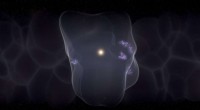
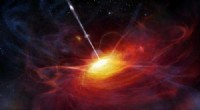
* The Big Bang began with an incredibly hot, dense state.
* As the universe expanded and cooled, basic particles formed: protons, neutrons, and electrons.
* These particles eventually combined to form hydrogen and helium, the most abundant elements in the universe.
2. Formation of Stars:
* Over millions of years, gravity pulled these gases together into giant clouds called nebulae.
* Within these nebulae, dense regions of gas collapsed under their own weight, forming stars.
3. Supernovae and Stellar Evolution:
* Stars live for varying lengths of time, depending on their mass.
* When massive stars run out of fuel, they explode in spectacular events called supernovae.
* These explosions scatter heavy elements (like carbon, oxygen, iron) created in the star's core into space.
4. Planetary Disks:
* These heavy elements, along with the remaining hydrogen and helium, form a swirling disk of gas and dust around a newly formed star. This is called a protoplanetary disk.
5. Accretion and Planet Formation:
* Dust grains in the disk collide and stick together, gradually growing larger.
* These larger particles attract more material, eventually forming planetesimals, the building blocks of planets.
* Over millions of years, planetesimals collide and merge, forming planets.
Key Points:
* The Big Bang created the building blocks: It provided the initial hydrogen and helium that later formed stars and planets.
* Stars create the heavy elements: Supernovae are crucial for dispersing the elements needed for rocky planets.
* Gravity is the driving force: Gravity pulls matter together, forming stars and planets.
* Accretion is the process: The gradual building up of planets from smaller particles is called accretion.
So, while the Big Bang was the initial event, the formation of planets is a complex process that involves many steps and occurs over millions of years.