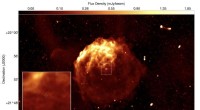
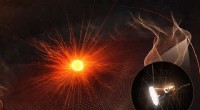
* Neutron Star: This is a very dense, compact object formed from the collapsed core of a massive star after a supernova explosion. It's made up primarily of neutrons and has a very strong gravitational pull. While they aren't truly "neutral" in the sense of having no charge, their overall charge is relatively small compared to other stars.
* White Dwarf: These are the remnants of smaller stars that have exhausted their nuclear fuel and shed their outer layers. They are very dense, but not as dense as neutron stars. They can be thought of as "dead" stars and are typically very faint.
* Brown Dwarf: These are objects that are too massive to be considered planets but not massive enough to sustain nuclear fusion like stars. They are often referred to as "failed stars" and can be much cooler and fainter than true stars.
It's important to note that "neutral" in the context of astronomy usually refers to the charge of a particle or object. Stars and other celestial bodies are typically made up of a balance of positive and negative charges, so they are generally electrically neutral.
If you can provide more context about where you encountered the term "neutral star," it might be easier to determine what you're referring to.