1. Solar Nebula: It all started with a giant cloud of gas and dust called the solar nebula. This cloud was mostly composed of hydrogen and helium, but also contained heavier elements like carbon, oxygen, and iron.
2. Gravitational Collapse: Over time, the solar nebula began to collapse under its own gravity. As it collapsed, it spun faster and faster, flattening into a disk. The center of the disk became incredibly hot and dense, eventually forming the Sun.
3. Planetesimals: Within the disk, small particles of dust and gas started to clump together through electrostatic forces and collisions. These clumps grew larger and larger, eventually forming kilometer-sized objects called planetesimals.
4. Accretion: These planetesimals continued to collide and merge, growing into larger and larger bodies. This process, known as accretion, is thought to have been a violent and chaotic time.
5. Mercury's Formation: Over millions of years, enough planetesimals collided in the inner solar system to create Mercury. Due to its proximity to the Sun, Mercury was likely subject to intense heat, which may have caused it to lose much of its lighter elements, leaving behind a dense, rocky core.
Here are some unique aspects of Mercury's formation:
* Early Impact: It is likely that a large impact event occurred early in Mercury's history, possibly causing the planet to lose a significant portion of its outer layers.
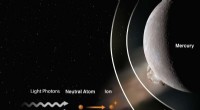
* Solar Wind: The intense solar wind from the young Sun may have stripped away some of Mercury's atmosphere.
In summary: Mercury formed from the accretion of planetesimals in the inner solar system. Its close proximity to the Sun likely influenced its composition and evolution, resulting in its unique characteristics.