Here's the breakdown:
* Cosmic radiation originates from outside our solar system, primarily from distant supernovae and other celestial events. It's high-energy radiation that can be harmful to living organisms.
* The Earth's atmosphere acts as our primary shield against cosmic radiation. The thick layer of air absorbs much of this radiation, protecting us on the surface.
* The Earth's magnetic field also plays a significant role, deflecting charged particles from the sun and other cosmic sources.
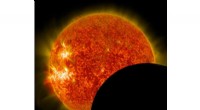
* The sun's radiation, while providing us with light and warmth, also has a negative side. Solar flares and coronal mass ejections can release large bursts of energy, including radiation, that can affect Earth's atmosphere and even disrupt satellites and power grids.
Therefore, the sun's rays are not a protection against cosmic radiation. Instead, they are a source of radiation themselves, although some of its components can contribute to shielding us from cosmic rays in complex ways.
So, while the sun is vital for life on Earth, it's not a protector against cosmic radiation. Our atmosphere and magnetic field are the key players in shielding us from these harmful rays.