Here are some examples:
* Conjunction: This describes when two celestial objects appear close together in the sky.
* Opposition: This occurs when a planet is on the opposite side of the Earth from the Sun.
* Syzygy: This refers to a straight-line alignment of three celestial objects, such as the Sun, Earth, and Moon during a solar or lunar eclipse.
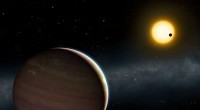
* Transit: This occurs when a celestial object passes directly in front of another, like when Mercury or Venus transits the Sun.
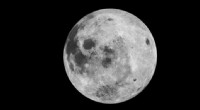
* Occultation: This happens when one celestial object passes in front of and hides another, like when the Moon occults a star.
* Alignment of planets: This is a more general term used to describe any alignment of planets, regardless of the specific configuration.
The term used will depend on the specific alignment and context.