Asteroids, especially those of that size, are very unlikely to have moons. Here's why:
* Small Size: The vast majority of asteroids are very small, and the gravity of such a small object is insufficient to hold a moon in orbit.
* Formation: Asteroids formed in a chaotic environment where collisions were common. Any potential moons they might have had could easily have been disrupted or ejected.
To find out if 55637 2002 UX25 has a moon, you would need to look for evidence of its presence through astronomical observations. This could include:
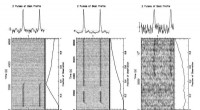
* Occultations: If a moon passes in front of a star, the star's light will be momentarily blocked, revealing the moon's existence.
* Astrometric Observations: Precise measurements of the asteroid's position over time could reveal a slight wobble caused by a moon's gravitational pull.
However, it's important to note that these observations are difficult to conduct for smaller asteroids like 55637 2002 UX25, making it unlikely that we have this information currently.