The Life of a Star:
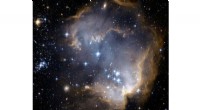
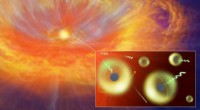
1. Birth: Stars are born from giant clouds of gas and dust called nebulae. Gravity pulls the material together, causing it to heat up and eventually ignite nuclear fusion.
2. Main Sequence: Most of a star's life is spent in the main sequence, where it fuses hydrogen into helium in its core. This process produces the energy that makes the star shine.
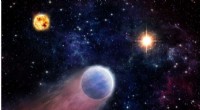
3. Red Giant (or Supergiant): As a star runs out of hydrogen fuel, it begins to fuse heavier elements like helium, causing it to expand and become a red giant (or supergiant if it's massive).
4. Final Stages: The star's final stages depend on its mass. Stars with relatively low mass will eventually shed their outer layers, leaving behind a white dwarf. Larger stars may become supernovae, exploding violently.
Black Hole Formation:
* Supernovae: For stars much larger than our Sun (at least 8 times more massive), the supernova explosion leaves behind a very dense, collapsed core.
* Gravity's Triumph: This core is so dense that even light cannot escape its immense gravitational pull. This collapsed core becomes a black hole.
Key Points:
* Not all stars become black holes: Only the most massive stars have the potential to collapse into black holes.
* Supernovae are essential: The supernova explosion is necessary to overcome the star's outward pressure and allow the core to collapse.
* Black holes are incredibly dense: A black hole's mass is concentrated in a very small space, creating immense gravity.
In summary: Stars become black holes through a specific process involving massive stars, their eventual supernova explosions, and the immense gravitational force that collapses their core into a point of singularity where not even light can escape.