Solar System:
* Definition: A solar system is a gravitationally bound system consisting of a star and the objects that orbit it, including planets, moons, asteroids, comets, and dust.
* Scale: Relatively small, encompassing a star and the celestial bodies within its gravitational influence.
* Example: Our own solar system, with the Sun as its star and Earth as one of its planets.
Galaxy:
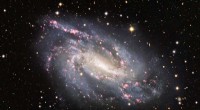
* Definition: A galaxy is a massive, gravitationally bound system consisting of stars, gas, dust, and dark matter.
* Scale: Enormous, containing billions or even trillions of stars, spanning vast distances.
* Example: The Milky Way galaxy, our home galaxy, which contains our solar system.
Key Differences:
* Size: Galaxies are vastly larger than solar systems.
* Components: Galaxies are composed of countless stars, while solar systems have a single star as their center.
* Gravity: Both are held together by gravity, but galaxies have a much stronger gravitational pull due to their massive size.
Analogy:
Imagine a single grain of sand as a solar system. Now imagine a vast beach full of billions of grains of sand, all interconnected and held together by gravity. This beach represents a galaxy.
Think of it this way:
* Solar System: A single family living in a house.
* Galaxy: A massive city filled with billions of families living in their own houses.