Cost: Ground-based telescopes are significantly cheaper to build and maintain than space telescopes.
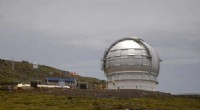
Size: Ground-based telescopes can be much larger than space telescopes due to limitations on launch size and weight. Larger telescopes gather more light, allowing for observations of fainter and more distant objects.
Accessibility: Ground-based telescopes are easily accessible for maintenance, upgrades, and even repairs, which can be extremely difficult or impossible for space telescopes.
Versatility: Ground-based telescopes can be easily modified to observe different wavelengths of light, allowing for greater versatility in research.
Adaptive Optics: Ground-based telescopes can employ adaptive optics to compensate for atmospheric distortion, producing sharper images than those achievable from space.
Longer Observations: Ground-based telescopes can be used for longer continuous observations than space telescopes, as they are not limited by orbital constraints.
Collaborative Research: Ground-based telescopes often foster collaborative research efforts due to their accessibility and shared resources.
However, ground-based telescopes also have some disadvantages:
* Atmospheric Distortion: Earth's atmosphere can distort light from celestial objects, making images blurry.
* Weather Limitations: Weather conditions can hinder or completely prevent observations.
* Limited Wavelengths: Some wavelengths of light are absorbed by Earth's atmosphere, limiting observations.
* Light Pollution: Artificial light from cities and other sources can interfere with observations.
Despite these disadvantages, ground-based telescopes remain a vital tool for astronomical research, and their advantages make them well-suited for many types of observations.