1. Milankovitch Cycles:
* Eccentricity: The shape of Earth's orbit around the Sun varies from nearly circular to slightly elliptical over a period of about 100,000 years. This affects the amount of solar radiation Earth receives at different times of its orbit.
* Axial Tilt (Obliquity): The Earth's axis is tilted at an angle of 23.5 degrees, causing seasons. This tilt varies between 22.1 and 24.5 degrees over a period of about 41,000 years. Changes in the tilt affect the intensity of solar radiation at different latitudes.
* Precession: The Earth's axis wobbles like a spinning top, completing a full wobble in about 26,000 years. This affects the timing of Earth's seasons relative to its position in its orbit.
These cycles are interconnected and collectively known as Milankovitch Cycles. They influence the long-term climate changes on Earth, including the onset and end of ice ages.
2. Gravitational Influences:
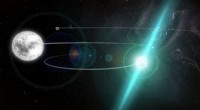
* The Sun and Moon: The gravitational pull of the Sun and Moon causes tides, and their combined influence also causes small variations in Earth's orbit. While these variations are relatively small, they contribute to the long-term dynamics of Earth's movement.
* Other Planets: While less significant than the Sun and Moon, the gravitational pull of other planets in the solar system can also cause subtle changes in Earth's orbit over very long timescales.
3. Solar Activity:
* Solar Cycles: The Sun's activity varies over an 11-year cycle, influencing the amount of solar radiation reaching Earth. While this doesn't directly affect Earth's orbit, it does impact the energy input to the planet and influences climate patterns.
It's important to note that:
* These changes are gradual and occur over very long periods.
* The interplay of these factors makes it complex to predict future variations in Earth's orbit and their impact on climate.
So, while not exactly three "periodic changes," these interconnected factors influence how Earth moves around the Sun and ultimately impact the Earth's climate system over time.