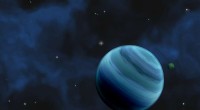
Here's a breakdown of what that means:
* Orbit: A curved path that an object takes around another object due to gravity.
* Planet: A large celestial body that orbits a star and does not produce its own light.
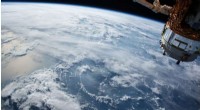
So, orbiting a planet means an object, like a moon or a spacecraft, is traveling in a curved path around a planet, held in place by the planet's gravitational pull.
Here are some examples:
* The Moon orbits the Earth: The Moon is a natural satellite of Earth, and it circles our planet in a regular, predictable pattern.
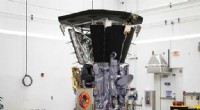
* Satellites orbit Earth: Many artificial satellites, designed for communication, observation, or research, orbit Earth.
* Spaceships can orbit planets: Astronauts can travel in spacecraft that orbit other planets, like Mars.
Let me know if you'd like to know more about a specific aspect of orbiting a planet, or if you have any other questions!