1. Luminosity: This refers to the total amount of energy a star emits per second. Luminosity is determined by:
* Size: Larger stars have a greater surface area and emit more energy.
* Temperature: Hotter stars radiate more energy per unit area.
* Composition: The chemical composition of a star can slightly influence its luminosity.
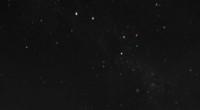
2. Distance: The apparent brightness of a star, as seen from Earth, is influenced by its distance. This is because light spreads out as it travels, so a star that is farther away appears dimmer, even if it has the same luminosity as a closer star.
In summary:
* Intrinsic brightness (Luminosity): Determined by size, temperature, and composition.
* Apparent brightness (What we see): Determined by luminosity and distance.
It's important to note that the apparent brightness we see is not always a reliable indicator of a star's true luminosity. We use various techniques, like measuring parallax and spectral analysis, to determine a star's actual brightness.