Stars
* Produce their own light and heat: Stars are massive balls of hot gas that generate energy through nuclear fusion in their core. This process releases immense amounts of light and heat.
* Self-luminous: You see stars because they emit their own light.
* Much larger than planets: Stars are generally much larger and more massive than planets.
* Composed primarily of hydrogen and helium: These elements fuse in a star's core, powering its energy output.
* Have a lifespan: Stars are born, live, and eventually die. Their lifespan depends on their size and mass.
Planets
* Do not produce their own light and heat: Planets are celestial bodies that orbit stars. They reflect the light of their host star, which is why we see them.
* Not self-luminous: Planets shine only because they reflect the light of their star.
* Much smaller than stars: Planets are significantly smaller and less massive than stars.
* Composed of various materials: Planets can be rocky (like Earth), gaseous (like Jupiter), or icy (like Neptune).
* Do not undergo nuclear fusion: Planets do not have the mass or internal conditions necessary for nuclear fusion to occur.
In summary:
Stars are like giant, self-powered furnaces that emit light and heat, while planets are like smaller, passive objects that reflect the light of their host star.
Bonus:
* There are exceptions to every rule. There are objects called "brown dwarfs" that are too massive to be planets but not massive enough to be stars. They may have a very faint glow due to deuterium fusion.
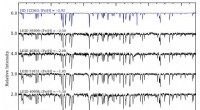
* It can sometimes be difficult to tell the difference. Especially with very young stars, the distinction can be blurry. Observational techniques, such as measuring the object's brightness, temperature, and spectrum, help scientists classify celestial bodies.