1. Seeing Beyond the Visible:
* Infrared telescopes: Infrared radiation is emitted by warm objects, including stars, planets, and even gas clouds. This allows us to study:
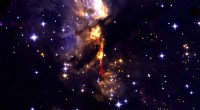
* Star formation: Infrared penetrates dust clouds, revealing the hidden processes of star birth.
* Planets: Infrared can help us understand the atmospheres and compositions of planets, including exoplanets outside our solar system.
* Early universe: Observing infrared light from distant galaxies helps us study the universe in its earlier stages.
* Radio telescopes: Radio waves are emitted by many cosmic objects, including:
* Pulsars: Rapidly spinning neutron stars that emit powerful radio pulses.
* Active galactic nuclei: Supermassive black holes at the centers of galaxies that emit vast amounts of radio radiation.
* Cold interstellar gas: Radio waves allow us to map the distribution and composition of cold gas clouds in space.
* Ultraviolet telescopes: Ultraviolet radiation is emitted by hot objects, like young stars and supernova remnants. This helps us study:
* Stellar atmospheres: UV radiation can be used to analyze the chemical composition and temperature of stars.
* Active galaxies: UV radiation can be used to study the energetic processes occurring in the nuclei of galaxies.
* Solar flares: UV telescopes provide valuable insights into the intense activity on the Sun.
* X-ray telescopes: X-ray radiation is emitted by extremely hot objects, such as:
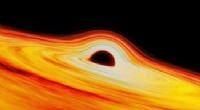
* Black holes: Accretion disks around black holes produce intense X-ray radiation.
* Supernovae: Exploding stars release enormous amounts of X-ray radiation.
* Neutron stars: These dense remnants of supernovae emit X-rays due to their strong magnetic fields.
2. Complementary Information:
Different wavelengths of electromagnetic radiation provide unique information about cosmic objects. By combining observations from different wavelengths, we can get a more complete picture of the universe. For example, observing an object in both visible light and infrared can provide information about its temperature and composition.
3. Observing Through Obscuring Media:
Some wavelengths can penetrate through media that block visible light, such as dust clouds. This allows us to observe objects that would otherwise be hidden.
4. Studying the Dynamics of the Universe:
Observations at different wavelengths can reveal the motion and evolution of cosmic objects. For example, studying the Doppler shift of radio waves from galaxies can tell us their movement towards or away from us.
5. Unveiling Hidden Phenomena:
Some phenomena, like pulsars and quasars, are only detectable at specific wavelengths. By observing these wavelengths, we can discover and study these fascinating cosmic objects.
In conclusion, telescopes that observe electromagnetic wavelengths other than visible light provide us with an invaluable window into the universe, allowing us to explore its wonders in ways that were previously unimaginable.