1. Nucleus:
* This is the heart of the comet, a solid, icy body ranging in size from a few meters to tens of kilometers.
* It's made of mostly frozen water, but also contains frozen gases (like carbon dioxide, methane, and ammonia) and dust particles.
* This is where the comet's material originates.
2. Coma:
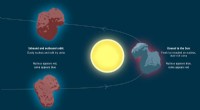
* A hazy, glowing cloud of gas and dust that surrounds the nucleus.
* It forms when the comet gets close enough to the Sun that the ice in the nucleus begins to sublimate (turn directly from solid to gas).
* The coma can be enormous, sometimes stretching millions of kilometers across.
3. Tail:
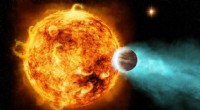
* A stream of gas and dust that stretches away from the coma, often for millions of kilometers.
* There are two main types of tails:
* Dust tail: Curved and made of dust particles pushed away from the comet by solar radiation pressure.
* Ion tail: Straight and made of ionized gas that is swept away by the solar wind.
* Tails are always pointing away from the Sun, even as the comet moves.
Here's a simple analogy:
Think of a comet like a dirty snowball:
* The nucleus is the snowball itself.
* The coma is the cloud of dust and ice crystals that forms around it as it melts.
* The tail is the trail of dust and water vapor that follows behind.
Key takeaways:
* Comets are icy bodies that release gas and dust as they approach the Sun.
* The nucleus is the solid core of the comet.
* The coma is a cloud of gas and dust surrounding the nucleus.
* The tail is a stream of gas and dust that extends away from the coma.
These components are essential for understanding the behavior and evolution of comets.