1. The Building Blocks:
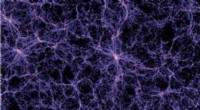
* Interstellar Medium: The universe isn't empty. It's filled with a vast cloud of gas and dust called the interstellar medium. This medium primarily consists of hydrogen and helium, with trace amounts of heavier elements.
* Supernovae: These are powerful explosions that occur at the end of a star's life. Supernovae are responsible for creating most of the heavier elements like carbon, oxygen, iron, and even gold. These elements are ejected into space, enriching the interstellar medium.
2. The Formation Process:
* Gravitational Collapse: Over time, regions within the interstellar medium with higher densities start to collapse under their own gravity.
* Accretion Disk: As the cloud collapses, it spins faster, forming a flattened disk of gas and dust called an accretion disk.
* Star Formation: At the center of this disk, the core gets hot and dense enough to initiate nuclear fusion, marking the birth of a star (in our case, the Sun).
* Planetary Formation: Meanwhile, in the surrounding disk, particles of dust and gas begin to clump together through collisions and electrostatic forces, eventually forming planetesimals (small, asteroid-like bodies). These planetesimals continue to collide and accrete, eventually forming planets.
Therefore, while supernovae provide the heavier elements necessary for planet formation, the solar system itself formed from the collapse of a cloud of interstellar gas and dust that was already enriched by previous generations of stars.
Key Points:
* Our solar system is not directly the result of a single supernova. It's the product of multiple supernovae over billions of years, enriching the interstellar medium with the necessary elements for planet formation.
* While the Sun is primarily hydrogen and helium, its heavier elements (like the ones making up the Earth) come from supernovae.
* The exact supernova that contributed the most to our solar system's formation is unknown, but we can study the elemental composition of our solar system to infer its origin.
In conclusion, while a supernova played a crucial role in providing the building blocks for our solar system, it wasn't the sole cause of its formation. The process was complex, involving multiple stages of gravitational collapse, accretion, and star formation.