Gathering Light:
* Collecting Light: Their primary function is to gather light from distant objects. This is achieved through their large mirrors or lenses. The bigger the telescope, the more light it collects, enabling it to see fainter and more distant objects.
* Focusing Light: The collected light is then focused onto a detector, which can be a camera, a spectrometer, or other scientific instruments.
Studying the Universe:
* Observing Distant Galaxies: They allow us to see galaxies billions of light-years away, giving us insights into the evolution of the universe and the formation of stars and planets.
* Analyzing Starlight: By studying the spectrum of starlight, astronomers can determine the chemical composition, temperature, and motion of stars, planets, and other celestial bodies.
* Detecting Exoplanets: Modern telescopes, like the Kepler and TESS missions, are designed to find planets orbiting other stars, increasing our understanding of planetary systems beyond our own.
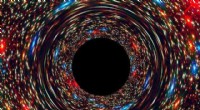
* Studying Black Holes: Telescopes like the Event Horizon Telescope have captured images of black holes, revealing their structure and confirming Einstein's theory of general relativity.
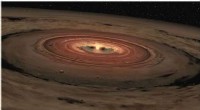
* Observing Cosmic Events: They can observe events like supernova explosions, the birth of stars, and the formation of planetary systems.
Beyond Visible Light:
* Infrared Telescopes: These telescopes observe infrared radiation, which can penetrate dust clouds, allowing us to see objects that are obscured in visible light.
* Radio Telescopes: These telescopes observe radio waves, which are emitted by cold objects and can reveal the structure of galaxies, the formation of stars, and the presence of magnetic fields.
* X-ray and Gamma-Ray Telescopes: These telescopes observe high-energy radiation emitted by extremely hot objects, such as black holes, supernova remnants, and active galactic nuclei.
Technological Advancements:
* Adaptive Optics: This technology corrects for the blurring effects of the Earth's atmosphere, allowing for sharper images.
* Space Telescopes: Telescopes placed in space, like the Hubble Space Telescope and the James Webb Space Telescope, are free from atmospheric interference, providing unparalleled clarity and sensitivity.
* Interferometry: This technique combines the signals from multiple telescopes, creating a virtual telescope with a much larger collecting area.
Modern telescopes are constantly evolving, pushing the boundaries of our knowledge and providing new insights into the vastness and complexity of the universe.