Here's why:
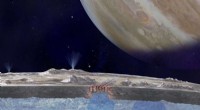
* Galileo's observations: Galileo was a brilliant astronomer who made groundbreaking observations with his telescope. He discovered the four largest moons of Jupiter, the phases of Venus, and observed sunspots. He also supported the heliocentric model of the solar system. However, his observations were limited by the technology of his time, and he did not have the precision necessary to determine the exact shape of planetary orbits.
* Kepler's laws: Johannes Kepler, a contemporary of Galileo, is credited with discovering the elliptical nature of planetary orbits. He analyzed meticulous observational data of Mars collected by Tycho Brahe, leading him to develop his three laws of planetary motion. The first law states that planets move in elliptical orbits, with the Sun at one focus.
While Galileo played a vital role in advancing our understanding of the solar system, the discovery of elliptical orbits is attributed to Kepler.