Here's a breakdown of different types of astronomical models:
1. Physical Models:
* Scale models: These are physical representations of celestial objects or systems, often reduced in size for easier visualization. Examples include planetarium models of the solar system or miniature models of planets and stars.
* Analog models: These use physical systems that behave similarly to the astronomical phenomenon being studied. Examples include using a pendulum to simulate the orbit of a planet or using a ripple tank to model gravitational waves.
2. Mathematical Models:
* Equations and formulas: These describe the behavior of astronomical objects and systems using mathematical relationships. Examples include Kepler's laws of planetary motion, Newton's law of gravitation, and Einstein's theory of general relativity.
* Statistical models: These use statistical methods to analyze large datasets of astronomical observations and draw conclusions about the properties of celestial objects and events.
3. Computer Simulations:
* Numerical models: These use computer algorithms to solve mathematical equations and simulate the evolution of astronomical objects and systems over time. Examples include simulations of galaxy formation, star evolution, and black hole mergers.
* Visualization models: These use computer graphics to create realistic images and animations of astronomical objects and events. Examples include 3D visualizations of galaxies, nebulae, and planetary surfaces.
Purpose of Astronomical Models:
* Explanation: Provide a framework for understanding how celestial objects and phenomena work.
* Prediction: Allow astronomers to predict future events, such as eclipses, meteor showers, and supernovae.
* Testing theories: Provide a way to test the validity of astronomical theories.
* Research: Aid in the discovery of new astronomical objects and phenomena.
Key features of astronomical models:
* Simplicity: They should be simple enough to understand and use.
* Accuracy: They should accurately represent the real world.
* Predictive power: They should be able to predict future events.
Examples of Astronomical Models:
* The Standard Model of Cosmology: Explains the origin and evolution of the universe.
* Solar System Models: Describe the motion and interactions of planets, moons, and other celestial bodies.
* Stellar Evolution Models: Describe the life cycle of stars.
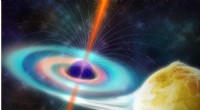
* Black Hole Models: Describe the properties and behavior of black holes.
Astronomical models are constantly being refined and improved as our understanding of the universe grows. They are essential tools for astronomers to explore the cosmos and unravel the mysteries of the universe.