1. Gravitational Influence of Jupiter:
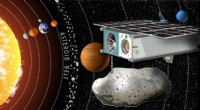
* Jupiter, the largest planet in our solar system, has a massive gravitational pull. It's located relatively close to the asteroid belt.
* This gravitational influence disrupted the orderly accretion of material in the asteroid belt, preventing the formation of a larger body.
* Jupiter's gravity constantly jostled the asteroids, sending them on chaotic paths, preventing them from coalescing into a planet.
2. Early Solar System Chaos:
* The early solar system was a turbulent place, with frequent collisions and gravitational interactions.
* This chaos likely disrupted the formation of a planet in the asteroid belt, scattering material and preventing it from clumping together.
3. Low Initial Mass:
* The asteroid belt initially had a lower mass than the material that formed the inner and outer planets.
* The combined gravitational influence of Jupiter and the early solar system's chaos likely prevented the belt from accumulating enough mass to become a planet.
4. Resonances:
* Jupiter's gravitational influence also created orbital resonances within the asteroid belt.
* These resonances act like "gravitational nudges" that prevented asteroids from staying in a stable orbit and coalescing.
5. Fragmentation:
* Collisions between asteroids, especially in the early solar system, could have fragmented larger bodies, preventing them from growing into a planet.
In summary:
While the asteroid belt contains a significant amount of material, the combined effects of Jupiter's gravitational influence, early solar system chaos, and the lack of enough initial mass prevented it from coalescing into a planet. This resulted in the fragmented, diverse collection of asteroids we see today.