1. Far From the Sun: A Frozen World
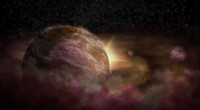
* Composition: Comets are essentially icy balls of frozen gas (like water, methane, ammonia), dust, and rock.
* Appearance: They're very faint and small, barely visible from Earth. They reside in the outer solar system in regions like the Kuiper Belt and Oort Cloud.
2. Approaching the Sun: Warming Up
* Solar Radiation: As a comet gets closer to the Sun, its icy core begins to warm up due to solar radiation.
* Sublimation: The ice turns directly into gas (sublimation), creating a large, dusty cloud called a coma around the nucleus.
* Tail Formation: The solar wind (a stream of charged particles from the Sun) pushes the coma material away, forming a long, glowing tail that stretches millions of kilometers behind the comet.
3. Closest Approach (Perihelion): Shine Bright
* Maximum Brightness: Comets are brightest and most spectacular when they are closest to the Sun (perihelion). The coma and tail are at their largest and most visible.
* Tail Types: Comets develop two main tail types:
* Dust Tail: The dust tail is broad and curved, reflecting sunlight.
* Ion Tail: The ion tail is straight and narrow, composed of ionized gas that is pushed away by the solar wind.
4. Moving Away from the Sun: Fading Away
* Cooling: As the comet travels further away from the Sun, it cools down.
* Tail Dissipation: The coma and tail gradually shrink and fade as the sublimation process slows down.
* Back to Sleep: Eventually, the comet becomes a dormant icy body once again, returning to its distant home.
Important Notes:
* Orbits: Cometary orbits are often highly elliptical, meaning they are very long and stretched-out.
* Orbital Period: Comets have a wide range of orbital periods, from a few years to millions of years.
* Cometary Activity: Not all comets exhibit activity every time they pass near the Sun. Some comets are dormant or even disintegrate over time.
Observations:
* Telescopes: Astronomers use telescopes to track comets and study their behavior.
* Spacecraft Missions: Several spacecraft have been sent to study comets up close, including Rosetta (which orbited Comet 67P/Churyumov-Gerasimenko).
Let me know if you want more details about any specific aspect of a comet's journey around the Sun!