1. Understanding the Structure and Evolution of the Universe:
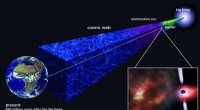
* Scale and Distribution: Measuring distances helps us map the location and distribution of stars in our galaxy and beyond. This information is vital for understanding the structure of the Milky Way and how galaxies form and evolve.
* Galaxy Formation and Evolution: By observing how stars interact within galaxies, we gain insight into the processes that drive galaxy formation and evolution, including star birth, star death, and galactic mergers.
* Cosmological Parameters: Observing the movement and distribution of stars allows us to study the expansion of the universe and determine important cosmological parameters like the Hubble constant.
2. Studying Stellar Properties and Evolution:
* Stellar Life Cycles: Observing the interactions of stars helps us understand their life cycles, from their birth in nebulae to their eventual demise as white dwarfs, neutron stars, or black holes.
* Stellar Masses and Sizes: Measuring the distances to stars allows us to determine their true brightness and thus their masses and sizes.
* Stellar Composition and Atmospheres: Analyzing the light from stars provides information about their composition, temperature, and surface gravity.
3. Understanding the Nature of Gravity:
* Testing Einstein's Theory of General Relativity: By studying the movement of stars in strong gravitational fields, we can test the predictions of Einstein's theory of general relativity, which describes gravity in the universe.
* Black Hole Dynamics: Observations of stars orbiting black holes provide evidence for the existence of these enigmatic objects and help us understand their properties and behavior.
4. Searching for Other Planets and Life:
* Exoplanet Detection: Observing the slight wobbles of stars caused by orbiting planets (the radial velocity method) allows us to detect planets beyond our solar system.
* Habitable Zones: By studying the properties of stars, we can determine the habitable zones around them, where conditions might be suitable for life to evolve.
In summary, measuring distances to stars and observing their interactions is crucial for unraveling the secrets of the universe, understanding the fundamental laws of physics, and potentially finding evidence of life elsewhere.