Gravity's Dependence
* Mass: The more massive a planet is, the stronger its gravitational pull. Imagine a planet as a giant magnet. A bigger magnet has a stronger pull.
* Distance: Gravity weakens the further you are from the center of a planet. Think of standing near a magnet - the pull is strong, but if you move away, it gets weaker.
Large Planets
* Stronger Gravity: Large planets have more mass, so they exert a stronger gravitational pull. This means things would weigh more on a large planet.
* Denser Atmosphere: Large planets often have a thicker atmosphere due to their strong gravity holding onto more gases. This can make the planet's surface hotter and more difficult to explore.
* More Moons: The gravitational pull of large planets can also attract and hold more moons in orbit.
Small Planets
* Weaker Gravity: Smaller planets have less mass, resulting in a weaker gravitational pull. Things would weigh less on a small planet.
* Thinner Atmosphere: Small planets often have thin or even no atmosphere because their gravity isn't strong enough to hold onto gases.
* Fewer Moons: Smaller planets have less gravity to attract and hold moons.
Examples
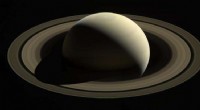
* Jupiter: As the largest planet in our solar system, Jupiter has immense gravity. It's so strong that it has attracted a massive number of moons.
* Mercury: Mercury is a small planet with weak gravity. It has a very thin atmosphere and no moons.
Important Note: The size and mass of a planet aren't the only factors that determine its gravity. The density of the planet also plays a role.
In Summary:
* Larger Planets: Stronger gravity, denser atmospheres, more moons.
* Smaller Planets: Weaker gravity, thinner atmospheres, fewer moons.