Composition:
* Primarily hydrogen and helium: Both stars and the Sun are composed mainly of hydrogen and helium, with trace amounts of other elements.
* Nuclear fusion: They both generate energy through nuclear fusion in their core. This process combines hydrogen atoms to form helium, releasing immense amounts of energy.
Energy Output:
* Light and heat: Both stars and the Sun radiate light and heat as a result of their nuclear fusion.
* Electromagnetic radiation: They emit a wide range of electromagnetic radiation, including visible light, infrared, ultraviolet, and X-rays.
Gravity:
* Strong gravitational pull: Their massive size creates a strong gravitational pull, which holds them together and prevents them from collapsing.
Life Cycle:
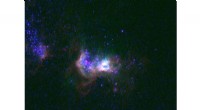
* Formation from nebulae: Both stars and the Sun formed from giant clouds of gas and dust known as nebulae.
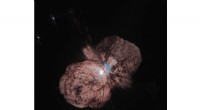
* Evolutionary stages: They both go through various stages of evolution, including a main sequence stage, a red giant phase, and potentially a white dwarf, neutron star, or black hole depending on their mass.
Differences:
While they share many similarities, there are some key differences:
* Size and mass: The Sun is a medium-sized star, while other stars can be much larger or smaller.
* Luminosity: Stars can vary greatly in their luminosity, which is the amount of light they emit.
* Temperature: The surface temperature of stars can vary considerably, affecting their color.
In essence, the Sun is simply a star that happens to be our closest star.